Most people associate X-Rays with medical imaging or security screening. In reality, modern X-Ray technology extends far beyond simply “seeing through” an object.
Today, X-Rays are an essential tool across industrial manufacturing, scientific research, and medical applications. Depending on the analytical technique, X-Rays can reveal internal structures, identify elemental composition, analyze crystal structures, measure material thickness, evaluate density variations, and even monitor object position in challenging environments.
Simply put, our eyes see surfaces—X-Rays reveal what lies beneath.
Let’s explore six ways X-Ray technology helps engineers and manufacturers better understand the materials and products they work with.
1. Looking Inside: Internal Structure Inspection
One of the best-known applications of X-Rays is non-destructive imaging.
Because different materials absorb X-Rays differently, detectors can generate detailed images of an object’s internal structure without cutting or damaging it.
Typical inspection targets include:
· PCB assemblies
· Semiconductor packages
· Welded joints
· Cast components
· Foreign object detection
· Archaeological artifacts
X-Ray imaging enables engineers to identify cracks, voids, misalignment, incomplete solder joints, and other hidden defects before products reach customers.
Key takeaway: See inside without taking anything apart.
2. Looking at Elements: Material Composition Analysis
Knowing what a material contains is often just as important as knowing what it looks like.
Using X-Ray Fluorescence (XRF), materials emit characteristic fluorescent signals when excited by X-Rays. These signals allow instruments to identify elements quickly and non-destructively.
Common applications include:
· Precious metal verification
· RoHS compliance testing
· Alloy identification
· Mining and ore analysis
· Sulfur analysis
· Recycling and material sorting
XRF can detect a wide range of elements, including gold (Au), silver (Ag), copper (Cu), iron (Fe), lead (Pb), cadmium (Cd), sulfur (S), and many others.
Key takeaway: XRF reveals a material’s elemental fingerprint.
3. Looking at Crystal Structure: Material Characterization
Materials with identical chemical compositions may perform very differently because of their internal crystal structures.
X-Ray Diffraction (XRD) helps researchers analyze how atoms are arranged inside crystalline materials.
XRD is widely used to study:
· Crystal structure
· Phase composition
· Crystallinity
· Grain size
· Residual stress
Applications span battery research, semiconductor development, advanced materials, universities, and research laboratories.
Key takeaway: XRD helps scientists understand not only what a material is—but how it is built.
4. Looking at Thickness: Precision Measurement Without Contact
In many manufacturing processes, thickness directly affects product quality and performance.
By measuring X-Ray attenuation, manufacturers can continuously monitor material thickness without touching the product.
Typical applications include:
· Battery electrodes
· Metal strip
· Aluminum foil
· Copper foil
· Plastic films
· Paper
· Coated materials
· Nonwoven fabrics
Because the measurement is non-contact and continuous, it is ideal for high-speed production environments.
Key takeaway: Accurate thickness measurement without interrupting production.
5. Looking at Density: Quality and Consistency Evaluation
Variations in density change how X-Rays pass through a material.
By analyzing transmitted X-Rays, manufacturers can evaluate internal density distribution and identify inconsistencies that may affect product performance.
Typical applications include:
· Composite materials
· Foam products
· Tobacco density measurement
· Food quality inspection
· Industrial process monitoring
Key takeaway: Density analysis helps verify consistency and product quality.
6. Looking at Position: Real-Time Process Monitoring
X-Rays can also be used as measurement tools rather than imaging tools.
By monitoring changes in X-Ray intensity, systems can continuously detect object position, material level, or process status—even inside sealed, high-temperature, or high-pressure equipment where conventional sensors may struggle.
Typical applications include:
· Level measurement
· Position detection
· Automation systems
· Industrial process control
Key takeaway: Reliable positioning and monitoring under demanding industrial conditions.
One Technology, Many Possibilities
Although these applications serve different industries, they all depend on one critical element: a stable and reliable X-Ray source.
Whether the goal is imaging, elemental analysis, crystal characterization, thickness measurement, density evaluation, or process control, X-Ray technology enables engineers and researchers to obtain information that would otherwise remain invisible.
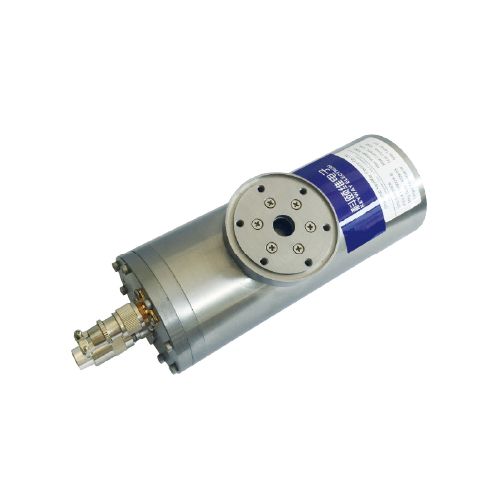
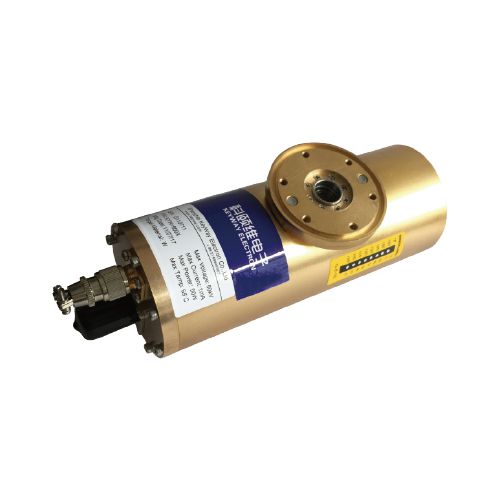
At KeyWay Electron, we have specialized in X-Ray core components for 28 years, supporting industrial, scientific, and medical applications with reliable X-Ray tube solutions.
Coming Next
KeyWay Academy | Fundamentals Series
Six Analytical Methods Behind Modern X-Ray Inspection
In our next article, we’ll introduce the major X-Ray analytical techniques—including XRF, XRD, X-Ray imaging, thickness gauging, density measurement, and level detection—and explain how each technology is used in real-world applications.