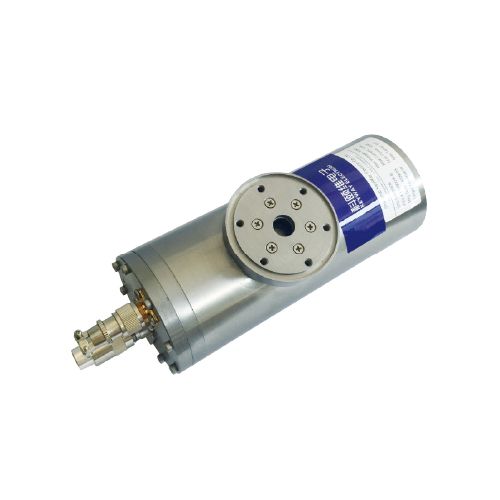
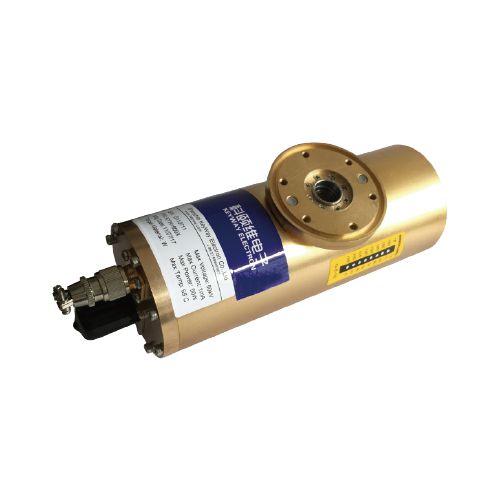
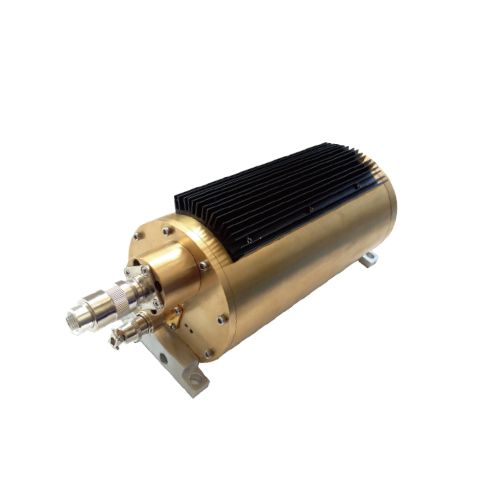
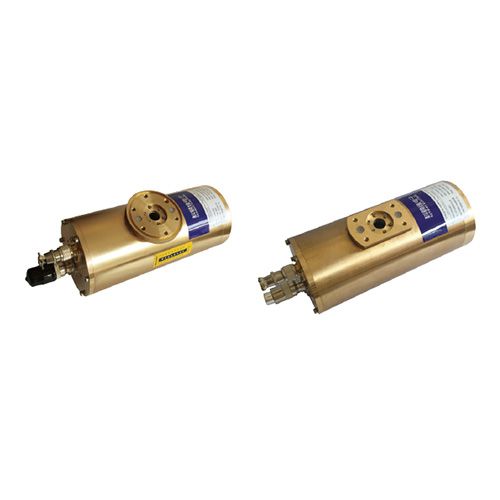
When selecting an X-Ray tube for industrial inspection or analytical equipment, three parameters matter: kV, mA and W.
Each describes a different aspect of X-Ray tube operation. Understanding their relationship helps engineers select suitable components for X-Ray applications.
1. What Does kV Mean in an X-Ray Tube?
kV (kilovolt) is the tube voltage applied between the cathode and anode. It accelerates electrons toward the anode target, where their interaction generates X-Rays.
Higher tube voltage generally produces higher-energy X-Ray photons and improves penetration through thicker or denser materials.
Tube voltage mainly affects:
· Maximum X-Ray photon energy
· Penetration capability
· X-Ray spectrum and beam quality
· Image contrast and material attenuation
For example, a tube operating at 100 kV has a maximum possible photon energy of approximately 100 keV.
In simple terms: kV mainly determines X-Ray energy and penetration.
2. What Does mA Mean in an X-Ray Tube?
mA (milliampere) measures the current flowing through the X-Ray tube. It reflects the rate at which electrons travel from the cathode to the anode.
At a given tube voltage, increasing tube current generally increases the number of electrons striking the target per second. This typically increases X-Ray output.
Tube current mainly affects:
· X-Ray photon quantity per unit time
· Detector signal level
· Exposure rate
· Signal-to-noise performance
Engineers also use mAs (milliampere-seconds), calculated by multiplying tube current by exposure time.
mAs represents the combined effect of current and exposure duration. It helps describe the total tube-current exposure during an imaging event.
In simple terms: mA mainly controls X-Ray quantity and output rate.
3. What Does W Mean in an X-Ray Tube?
W (watt) represents electrical power delivered to the X-Ray tube.
Under simplified DC operating conditions, electrical input power can be estimated using:
Power (W) ≈ Tube Voltage (kV) × Tube Current (mA)
For example, operating at 100 kV and 2 mA corresponds to approximately 200 W of electrical input power.
This does not mean the tube produces 200 W of X-Ray radiation. Most of the electron energy deposited at the anode becomes heat, while only a small fraction becomes X-Rays.
Tube power therefore relates closely to anode heat load, cooling requirements and allowable operating conditions.
Actual power limits depend on the tube design, focal spot, anode structure, cooling method and duty cycle.
In simple terms: W indicates electrical power and helps define thermal operating requirements.
4. How Do kV, mA and W Work Together?
| Parameter | Main function | Key engineering consideration |
| kV | Determines photon energy and penetration | Material thickness and beam quality |
| mA | Influences photon quantity and output rate | Signal level and exposure time |
| W | Indicates electrical input power | Heat management and operating limits |
These parameters work together, but they are not interchangeable.
Increasing kV changes the X-Ray energy spectrum and generally improves penetration. Increasing mA mainly increases photon quantity at a given voltage.
Two operating conditions can have similar electrical power but produce different X-Ray spectra and inspection results.
Engineers should therefore consider the application, sample material, detector, image quality requirements and tube specifications together.
5. Three Common Misunderstandings
Misunderstanding 1: Higher kV simply means more X-Rays.
Higher kV affects both photon energy and output. However, the resulting output also depends on tube current, target material, filtration and generator characteristics.
Misunderstanding 2: Higher mA always produces a clearer image.
Higher mA can improve signal statistics when photon quantity limits image quality. However, it cannot compensate for insufficient penetration or unsuitable system configuration.
Misunderstanding 3: kV and mA can replace each other.
They serve different purposes. kV mainly affects photon energy and penetration, while mA mainly affects photon quantity per unit time.
Frequently Asked Questions(FAQ)
Q: Why is higher kV often used for thicker materials?
A: Thicker or denser materials generally require higher-energy X-Rays for adequate penetration. The appropriate voltage also depends on the material and inspection setup.
Q: Does higher mA increase X-Ray output?
A: Yes. At a given tube voltage, higher tube current generally increases X-Ray output per unit time.
Q: Does higher W always mean better performance?
A: No. Higher power may support greater output, but the tube must operate within its specified thermal limits and duty cycle.
The right combination depends on the inspection task, detector, required performance, and X-Ray tube specifications.
For instrument manufacturers and system integrators, selecting a suitable X-Ray tube and high-voltage power supply is essential for stable, reliable system operation.